
Wondering if you really need to move out while your place gets painted? For most interior painting Chicago projects, you can stay in your home with the right products, ventilation, and plan—but there are situations where leaving for a day or two is the more comfortable and safer choice.
This guide walks you through how Chicago’s climate, building types, and your household’s health all affect that decision. By the end, you’ll have a clear checklist to decide whether to stay put, move out briefly, or adjust your interior painting schedule so your home still feels livable the whole time.
We’ll look at how paint fumes actually work, why modern low-VOC interior paint is a game changer, and what’s different when you’re painting a Lakeview condo vs. a Lincoln Park single-family home. You’ll also see how an experienced Chicago painting contractor can phase work so your family isn’t camping in chaos for a week.
Short Answer: When You Can Stay vs. When You Should Move Out
You don’t always need to move out during an interior painting Chicago project. Most families can stay home if the project is small or phased, your painter uses low-VOC products, and there’s at least basic ventilation. You should seriously consider moving out for a few days if the whole home is being painted at once, oil-based or high-VOC products are required, or someone in your home is especially sensitive to paint fumes.
Think of it like this: the more paint going on the walls in a short time—and the less fresh air you can bring in—the more intense the fumes and disruption will feel. In a mild-weather week when you can crack windows and run fans, staying is usually fine for room-by-room interior house painting Chicago projects. In a deep-winter whole-home repaint, a short stay with family or a hotel can be worth every penny for comfort and indoor air quality.
Quick rule of thumb:
Staying is usually fine if: you’re painting one or two rooms at a time, using low-VOC interior paint, and you can isolate the work area.
Moving out is worth considering if: every bedroom is being painted at once, a baby, pregnant person, or someone with asthma lives there, or your Chicago building has poor ventilation and it’s too cold or too hot to open windows.

Key Factors That Decide If You Need to Move Out
Whether you should move out during interior painting comes down to a handful of practical factors: project size, paint chemistry, how well you can ventilate, your building type, and who lives in the home. When you look at these together, the decision usually becomes clear.
1. Project size and schedule
A quick room-by-room interior painting job (say, just the living room and one bedroom) is far easier to live through than a whole-home repaint. If ceilings, trim, and all walls over multiple floors are getting done in two or three intense days, the amount of wet surface area—and therefore fumes—is much higher.
2. Paint type and VOC levels
Modern low-VOC interior paint contains far fewer volatile organic compounds than older formulas. According to an overview of low-VOC and no-VOC paint definitions, low-VOC products are typically under 50 grams per liter of VOCs, while zero-VOC paints are under 5 grams per liter. Lower VOCs usually mean milder odor and less impact on indoor air quality—especially important if you’re staying home.
3. Ventilation and Chicago seasons
In a Chicago summer or mild spring/fall week, you can open windows, run exhaust fans, and move indoor air out quickly. In January, when it’s below freezing and windy off the lake, you can’t just leave everything open for hours. Season and ventilation options are a huge part of deciding if staying will feel okay.
4. Building type: condo, two-flat, or single-family
Interior painting in a high-rise or tight West Loop condo is different from painting a wide Irving Park bungalow. Multi-unit buildings may have shared ventilation, long hallways, and elevator rules that limit how you manage fumes. Older Chicago brick two-flats often have smaller rooms and fewer windows per room, which changes airflow during painting.
5. Household health and sensitivities
Even with great products, paint fumes can bother some people more than others. If anyone has asthma, allergies, chemical sensitivities, is pregnant, or is very young or elderly, you’ll want to be more cautious about staying in the space while fresh paint is curing.
Here’s a simple comparison to help you weigh “stay vs. move” overall:
Comfort. Staying home means some noise, odor, and room shuffling. Moving out means minimal disruption and a return to finished space.
Health risk. Staying home is low to moderate risk with low-VOC paint and good ventilation. Moving out is the lowest risk, especially for sensitive occupants.
Cost. Staying home has no lodging cost, but a bit more daily hassle. Moving out adds lodging or alternate-stay cost for a few nights.
Contractor efficiency. Staying home often means phased work, which may extend the timeline slightly. Moving out lets the contractor move faster by working whole-home zones.
Best for. Staying home works well for one to three rooms, good ventilation, and healthy adults. Moving out is better for a whole-home repaint, winter projects, and sensitive lungs.
Health & Safety: Paint Fumes, VOCs, Kids, Pets, and Sensitive Lungs
Most modern interior paints are much safer than older products, but they still release some VOCs and odors as they dry and cure. Understanding what’s actually in the air—and how long it sticks around—helps you decide what’s right for your family during an interior painting Chicago project.
What are VOCs and paint fumes?
Volatile organic compounds are chemicals that evaporate into the air as paint dries, a process called off-gassing. The Canadian government notes that the health effects of VOCs can include irritation of the eyes, nose, and throat, headaches, and at higher exposures, potential damage to the liver, kidneys, and central nervous system. That’s why indoor air quality and ventilation during interior painting matter.
Low-VOC and zero-VOC paint, explained
Low-VOC paint is formulated to have significantly fewer VOCs than traditional products. As outlined in the low-VOC and no-VOC paint definitions, these paints generally keep VOC levels under 50 g/L, which means less odor and a shorter period of noticeable fumes.
Zero-VOC paint goes further and keeps VOCs typically under 5 g/L. While colorants can still add small amounts, these formulas are often the best choice when kids, pets, or sensitive lungs will remain in the home during and right after painting.
Off-gassing is the time window when paint continues to release tiny amounts of VOCs after it feels dry to the touch. Odor tends to be strongest in the first 24–48 hours, then fades as ventilation clears the space.
How long are paint fumes an issue?
The U.S. Consumer Product Safety Commission’s guidance on healthy indoor painting practices recommends using fans and open windows while you paint and, for some products, for 2–3 days afterward to help clear indoor air. In real-world terms, many Chicago homeowners find that low-VOC interior paint smells noticeably for a day or two, then becomes faint with good airflow.
Is it safe to sleep in a freshly painted room?
With low- or zero-VOC interior paint and decent ventilation, many healthy adults feel comfortable sleeping in a freshly painted bedroom after about 24 hours, especially if doors were kept closed during painting and windows/fans are run afterward. For babies, toddlers, pregnant people, or anyone with asthma or respiratory issues, giving it 48–72 hours is a safer, more conservative buffer.
Kids, pets, and sensitive individuals
If you decide to stay home during interior painting with kids or pets, focus on creating “no-paint zones” where air is fresher and their routines feel normal. Consider arranging an alternate stay for:
Newborns and infants, whose lungs are still developing.
Pregnant people, especially in the first trimester.
Anyone with asthma, COPD, or strong chemical sensitivity.
Elderly family members who may be more vulnerable to irritation.
Pets react to paint fumes too; cats and small dogs can be sensitive, and they’re curious about wet surfaces. Boarding a pet for a day or two, or letting them stay with a friend during the “heaviest” paint days, often reduces stress for everyone.
If you stay home, follow these steps to boost interior painting fumes safety:
Use low-VOC or zero-VOC products wherever possible.
Keep doors closed to active work areas while paint is wet.
Run window fans blowing air out, and crack a window in an opposite room to create cross-ventilation.
Plan sleeping spaces in rooms painted earlier so fumes have more time to dissipate.
Continue running fans and opening windows when weather allows for 2–3 days after painting.
Practical Plan: How Noir Painting Minimizes Disruption in Chicago Homes
A well-planned interior painting Chicago project is about more than color and clean lines—it’s about how your home feels to live in while the work is happening. Noir Painting focuses on phasing, ventilation, and communication so you don’t feel like you’re living on a construction site.
Room-by-room, not chaos everywhere
Instead of covering your entire home in plastic at once, interior painters in Chicago can sequence spaces so you always have usable zones. For example, in a Lincoln Park rowhouse, common areas might be painted first, then bedrooms on a schedule that keeps at least one or two sleeping spaces paint-free at any given time.
Low-VOC interior paint as the default
Using low-VOC interior paint dramatically cuts down on that harsh “paint smell” and shortens the time your home needs extra ventilation. For most interior house painting Chicago projects, there is a low- or zero-VOC product that fits the design goals, whether you’re going moody and dramatic or bright and airy.
Chicago-specific ventilation strategies
Painting in winter in Chicago calls for a different plan than a June project. When it’s cold, window openings are shorter and more strategic—staggered breaks with fans set to exhaust air quickly, rather than all-day open windows. In condos from Bucktown to the West Loop, ventilation might rely more on balcony doors, corridors, and bathroom fans to keep indoor air moving without freezing you out.
Coordination with condo boards and neighbor
Apartment painting in Chicago often comes with HOA rules, freight elevator schedules, and neighbors who share air and hallways. A professional interior painting contractor will plan material deliveries, quiet hours, and ventilation steps that respect those realities while still keeping your home comfortable enough to stay in.
Typical interior project planning steps
Walkthrough and goals: Review your floor plan, talk through who lives there, pets, and any sensitivities.
Color and product planning: Choose colors that fit how you want each room to feel, paired with low- or zero-VOC paints where possible.
Scheduling by room: Map out which rooms are painted on which days so you always have access to key spaces.
Prep and protection: Protect floors and furnishings, set up containment to keep dust and odor as localized as possible.
Ventilation plan: Decide in advance which windows, fans, and doors are used at each stage, based on season and building layout.
Handled this way, interior painting with kids and pets becomes much more manageable—you might shuffle rooms for a few nights, but you don’t feel like you’ve lost your whole home.
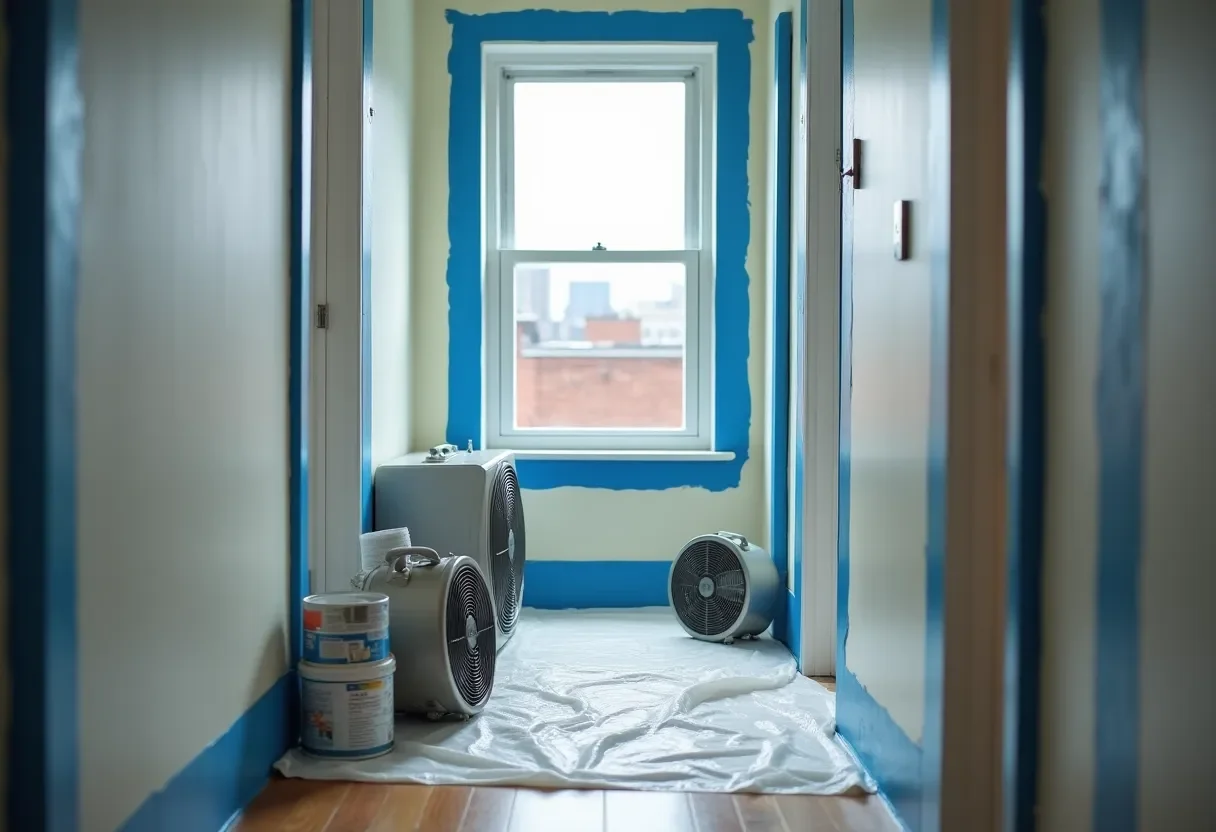
Decision Checklist: Should Your Chicago Family Move Out?
Use this quick checklist to decide if you should stay or move out during your interior painting Chicago project. If you answer “yes” to several questions in the “move out” column, a short break from home is probably the more comfortable call.
Project scope
Staying makes sense if: you’re repainting one or two rooms, or doing room-by-room interior painting spread over several days.
Moving out is worth it if: you’re doing a whole-home repaint—every bedroom, hallway, and living space—over a tight schedule.
Building and layout
Small West Loop condo with one bedroom being painted and windows you can open? Staying is usually fine with low-VOC paint and fans.
Three-story single-family in Irving Park with all floors being painted at once in January, limited places to escape fumes, and kids home in the evening? A 2–3 night move-out can be a smart trade.
Season and ventilation
If your project lands in mild weather and you can open multiple windows, you can often stay even for larger jobs, as long as work is phased.
If it’s a deep-winter or peak-summer heatwave when windows need to stay mostly closed, leaning toward moving out becomes more appealing for big projects.
Household health
Mostly healthy adults and older kids, no major respiratory issues: staying is often workable with a solid ventilation plan.
Pregnancy, infants, elderly family, serious asthma, or strong chemical sensitivity: consider temporary housing during the heaviest painting and curing days, especially for whole-house jobs.
Tolerance for disruption
If you don’t mind sleeping in a guest room for a night or eating around a covered dining table for a day or two, staying can save lodging costs.
If clutter, noise, and odor really stress you out—or you work from home in client-facing video calls—moving out can preserve your sanity.
For many interior painters Chicago residents hire, the sweet spot is a hybrid approach: you stay home for smaller or early phases, then spend one or two nights elsewhere when bedrooms or the main floor are being finished. A local Chicago painting contractor can look at your exact situation and help you map out the least disruptive option.
FAQs About Staying in Your Chicago Home During Interior Painting
Is it safe to stay in my Chicago home while it’s being painted?
For most interior painting Chicago projects that use low- or zero-VOC paints and have reasonable ventilation, it’s generally safe for healthy adults to stay home. The key is isolating work areas, running fans, and giving newly painted rooms at least 24 hours before heavy use.
How long after interior painting is it safe to sleep in a room?
With low-VOC products, many people feel comfortable sleeping in a freshly painted room after about 24 hours of drying with windows cracked and fans running. If you’re pregnant, have asthma, or are setting up a nursery, giving it 48–72 hours is a more cautious buffer.
Should kids and pets stay somewhere else during interior painting?
If you’re only painting one or two rooms and can keep kids and pets completely out of those spaces, they can often stay in the home. For whole-house interior painting, or if anyone is very young, elderly, or has respiratory issues, arranging for them to stay with family, friends, or a pet boarder for the main painting days is often the most comfortable and cautious option.
Does low-VOC paint mean I never have to move out?
Low-VOC interior paint greatly reduces odor and VOC levels, but it doesn’t eliminate them entirely. For small or phased interior house painting Chicago projects, low-VOC often makes staying home very manageable. For whole-home projects, winter work, or highly sensitive occupants, moving out briefly can still be the better move—even with the best products.
How does a Chicago painting contractor plan an interior job if we need to stay in the home?
A professional interior painting contractor will walk your space, learn your schedule, and then phase the job so you always have safe, functional rooms. That usually means room-by-room painting, prioritizing key spaces like kitchens and bedrooms, choosing low- or zero-VOC products, and building a ventilation plan that works with Chicago weather. If you’re planning interior painting in Chicago and aren’t sure whether to stay or move out, reach out to a local pro to get a personalized plan that fits your home, your family, and your comfort level.