
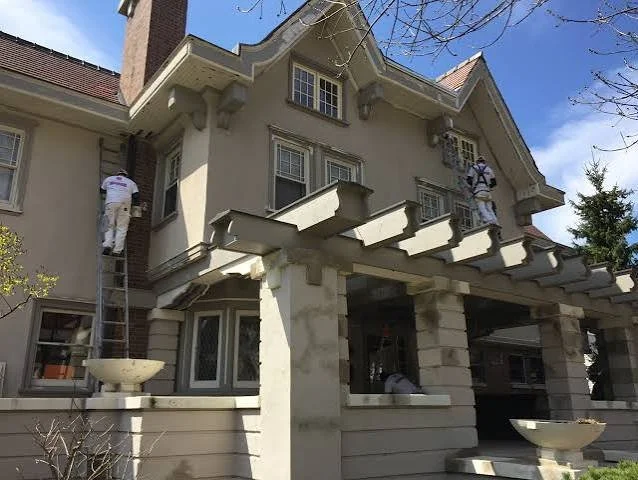
In Chicago, timing your exterior paint job is just as important as the color you choose. The city’s wild temperature swings, lake-effect humidity, and long winters mean there is a short, high-quality window each year when exterior painting really performs. If you plan your project around that Chicago exterior house painting season, your paint will look better and last longer.
This guide breaks down exactly when to paint, what conditions to watch, and how to plan ahead for exterior painting in Chicago so you don’t miss the season. You’ll see how spring, summer, and fall compare, what temperatures you actually need, and how to line up a Chicago-based exterior painting contractor before everyone’s calendar fills.
Why Timing Matters for Exterior Painting in Chicago
The best time to paint outside in Chicago is limited because paint needs warmth and stability to cure, and our climate rarely cooperates for long. Paint that goes on in the wrong conditions can peel, crack, or fade years earlier than it should. Getting the timing right means your investment survives Chicago’s winters instead of failing after one or two seasons.
Most exterior latex paints are designed to be applied when air and surface temperatures are at least about 50°F and stay above freezing for several days, according to guidance on the ideal outdoor temperature range for exterior paint. Chicago’s spring and fall often swing from 70°F afternoons to 35°F nights, which can trap moisture in the paint film or stop curing altogether. Add Chicago’s humid summers, lakefront fog, and 100+ freeze–thaw cycles each year, and your siding is under constant stress.
That’s why the core exterior house painting Chicago weather window typically runs from late May into early October, with June through September as the most reliable stretch. Within that window, a crew can work around a surprise cold front or storm; outside it, they’re fighting the forecast every single day. For you, the homeowner or small property owner, smart timing means fewer callbacks, fewer headaches, and a home or storefront that keeps its color and protection through many Chicago winters.
Quick Answer: Best Time of Year to Paint a House Exterior in Chicago
The best time of year to paint a house exterior in Chicago is generally from late May through late September, when daytime highs are around 60–85°F, nights stay above about 45–50°F, and humidity is moderate. Early June through early September is usually the “sweet spot” because temperatures are stable and freeze risk is low. Painting outside this window gets riskier and often shortens the life of the paint job.
Here’s a simple good/better/best guide for when to paint house exterior in Chicago, based on typical conditions:
Late spring, from May into early June, brings 60 to 75°F days and 45 to 55°F nights, with the main risks being rain, cool nights, and unpredictable cold snaps. It's a good window overall, though it's worth checking the 10-day forecast before you commit. Summer, from mid-June through August, runs 70 to 85°F during the day and 60 to 70°F at night, and while high humidity and heat on full-sun facades are the things to watch, this is the best and primary season for exterior house painting in Chicago.
Early fall, from September into early October, sees 60 to 75°F days and 45 to 55°F nights, with fast-dropping temperatures, more rain, and dew as the key risks, making it a good-to-fair window that's best handled on a project-by-project basis. Late fall and winter, from mid-October through April, is often below 50°F with frequent freezes, and between the freezing temperatures, snow, and constant freeze-thaw cycles, it's off-limits for most exterior projects.
Ideal conditions for most exterior paints in Chicago look like this:
Air and surface temperatures around 50–85°F.
Overnight lows staying safely above freezing, ideally above 40–45°F, for several days after painting.
Humidity below about 70% so paint can cure instead of trapping moisture.
Dry surfaces with at least 24 hours of rain-free weather before and after application.
If you’re planning exterior painting in Chicago and want a freshly painted exterior for summer, aim to book your estimate in March or April so you can land a June or July spot, before calendars fill up.
Season-by-Season Guide to Exterior Painting in Chicago
Spring: April through Early June
Spring can be a great time to start exterior painting in Chicago, but only once the nights stop flirting with freezing. April is often too early because of cold rains, overnight lows near 32°F, and wild swings from 40°F to 80°F in one week. By mid to late May, days are often in the 60s and 70s with nights in the 40s and 50s, which is workable when the forecast looks stable.
Pros of spring:
You beat the peak-season rush and often have better scheduling options.
Cooler daytime temps are easier on crews working on sunny, south-facing facades.
You enjoy a fresh exterior all summer.
Cons:
Rain and high humidity can cause delays.
Late cold snaps can force rescheduling or limit which products are safe to use.
For small commercial properties or multi-unit buildings, spring is often ideal because tenants and customers are still mostly inside, and you can be ready before summer traffic ramps up.
Summer: Mid-June through August
Summer is generally the best season to paint brick and siding in Chicago. This is when temperatures and overnight lows are most consistent, with many days in the 70–85°F range. Humidity can be intense, especially near Lake Michigan, but experienced crews can work around it by starting earlier, chasing shade, and avoiding painting in direct sun on extremely hot siding.
Advantages of summer for exterior painting Chicago projects:
Longest days, which gives crews more working hours.
Stable warm temperatures that support proper curing.
Lower risk of surprise freezes or cold rain.
Challenges:
Higher humidity slows drying and can make surfaces feel tacky longer.
Afternoon storms sometimes require flexible scheduling.
Contractors’ calendars are usually packed; last-minute bookings are tough.
If you own a café or retail storefront in neighborhoods like Logan Square or Lincoln Square, early summer is perfect to repaint before patio season and heavy foot traffic.
Early Fall: September and Early October
Early fall can still be a decent time for exterior painting in Chicago, especially in the first half of September. Days are comfortable, sun is less intense, and humidity often drops. The main risk is how quickly temperatures slide once the sun goes down, especially in inland neighborhoods far from the lake.
Pros:
Soft, flattering light helps with color evaluation on your siding or brick.
Cooler days are easier for crews and can reduce lap marks on large walls.
Good option for touch-ups or smaller projects that don’t take weeks.
Cons:
Overnight lows can dip into the low 40s or 30s without much warning.
Heavy dew and earlier sunsets shorten your daily working window.
By October, you’re constantly watching for nights too cold for safe curing.
For full repaints, especially on older Chicago bungalows or multi-flats, most painting contractors will lean toward wrapping up by early October unless the forecast looks unusually mild.
Late Fall and Winter: Mid-October through April
Late fall and winter are usually off-limits for exterior work in Chicago. Once daytime highs struggle to hit 50°F and nights regularly drop near or below freezing, conventional exterior paints cannot cure correctly. Even so-called “low-temperature” acrylics that can be applied around 35–40°F still need temperatures to stay above that threshold while they cure, according to manufacturer guidance on exterior latex paint application conditions.
Between November and April, Chicagoland also sees frequent snow, sleet, and cycle after cycle of thawing and refreezing. Trying to squeeze in exterior house painting during this time almost always sacrifices durability and appearance. It’s far safer to shift focus to interior projects in winter and plan ahead for the late spring and summer exterior season instead.
Chicago Climate Challenges: Freeze–Thaw, Lake Effect, and Microclimates
Chicago is tough on exterior paint because it combines brutal winters, humid summers, and constant movement in the building envelope. Understanding these local climate quirks helps you see why timing matters so much and how often you may need to repaint.
Researchers and building scientists often note that cities like Chicago can see over 100 freeze–thaw cycles per year, where temperatures cross above and below 32°F repeatedly. Each time that happens, moisture inside brick, stucco, and wood expands and contracts, stressing the paint film. If that paint was applied outside the ideal outdoor temperature range for exterior paint or over damp surfaces, it’s far more likely to crack, blister, or peel under this movement.
Lakefront neighborhoods like Edgewater, Rogers Park, and South Shore also deal with higher humidity and more frequent fog and dew from Lake Michigan. That extra moisture means:
Surfaces take longer to dry after rain.
Morning dew lingers on shady north- and east-facing walls.
Mildew and algae growth can appear sooner on damp siding or masonry.
Inland areas like Jefferson Park or Garfield Ridge might dry faster but bake in direct sun, especially on west- and south-facing facades. Here, intense sun and heat can push surface temperatures well above the air temperature, which can cause blistering if paint is brushed onto hot siding in the middle of the day.
Because of these microclimates, the best strategy for exterior house painting Chicago weather is to:
Schedule the project within the late spring to early fall window.
Paint shady sides earlier in the day and full-sun sides later, or vice versa, depending on heat.
Lean on high-quality acrylic paints designed to flex and breathe in a climate with heavy freeze–thaw cycles.
In terms of how often to repaint, many Chicago homes need fresh exterior paint roughly every 7–10 years, and sometimes every 5–7 years on heavily exposed sides or older substrates. Poor timing or low-quality products can cut that life in half.
Planning Exterior Painting in Chicago: Your Project Timeline
The smartest way to approach exterior painting in Chicago is to work backward from when you want the job finished. Because the season is short and crews book up quickly, planning a few months ahead makes the entire process calmer and more predictable.
A simple project timeline for Chicago exterior house painting might look like this:
2–4 months before painting: Decide that you want your home or building painted this year. Start gathering inspiration images, noticing peeling or bare wood, and thinking about colors.
6–8 weeks before painting: Request consultations from exterior painters in Chicago. This is often March–April for early summer projects or May–June for late summer projects.
4–6 weeks before painting: Finalize your estimate, scope, and color choices. Lock in your spot on the schedule with a signed agreement.
1–2 weeks before painting: Clear the work areas (trim plants, move furniture, confirm access and parking for crews).
Project week: Walk the property with the crew lead, confirm details, and let them adjust daily based on the weather forecast.
If you want your exterior ready by June, aim to contact a Chicago painting contractor in March. For a September finish, reach out by June or early July. Many exterior painters Chicago homeowners call in August or September are already booked or have limited flexibility left in the season.
Here’s a quick checklist to use before you book:
Decide your ideal “done by” month (June, July, etc.).
Note any special constraints like HOA rules, business hours, or tenant schedules.
Ask contractors about their weather policy: minimum temperatures, humidity limits, and how they handle rain delays.
Confirm whether they’ll inspect for rotten wood, failing caulk, or masonry repairs before painting.
Planning ahead also helps avoid the classic Chicago scenario: a homeowner with serious peeling who calls in October, only to learn that safe painting conditions are basically over. In contrast, owners who call in early spring typically enjoy smoother scheduling and a stress-free path to a freshly painted exterior by mid-summer.
Color and Atmosphere: Making Exterior Paint Work with Chicago’s Light
Timing your project around the Chicago exterior house painting season is step one; choosing colors that look good in Chicago light all year is step two. Because the city shifts from harsh summer sun to months of grey skies and snow, colors can feel very different between July and February.
Here’s how to think about exterior color in Chicago’s climate:
Summer sun vs. winter grey: Bright whites and very light grays can look crisp in June but almost blinding on a south-facing facade at midday. In winter, the same colors might feel cold and stark against snow. Slightly warmer off-whites and soft greiges often feel kinder in both seasons.
Brick and stone context: Many Chicago two-flats and bungalows mix brick, stone, and siding. Choosing trim and accent colors that echo the undertones in your masonry (warm red vs. cool brown) keeps the house feeling cohesive even under shifting light.
Neighborhood character: On the North Side and in historic districts, you may want to nod to traditional palettes while still adding personality with front doors or accent details. In busier commercial corridors, bolder storefront colors can stand out without clashing with older facades.
It also helps to test color samples at different times of day and in different weather. A medium blue that feels calm on an overcast afternoon may read almost neon in full sun. When you’re planning exterior painting in Chicago, especially for a façade that you’ll live with for a decade, it is worth seeing how your short list of colors behaves in July sun, October overcast, and with nearby trees leafed out or bare.
For small businesses, think about how your exterior color supports your brand and mood on a grey February morning. A thoughtfully chosen, saturated accent at the entry or signage band can make a storefront feel welcoming even when the sidewalks are slushy.
FAQs: Exterior Painting in Chicago’s Weather
When is the best time of year to paint a house exterior in Chicago?
The best time to paint a house exterior in Chicago is typically from late May through late September, with early June to early September offering the most reliable combination of warm days, mild nights, and manageable humidity. Within that window, temperatures often fall in the 60–85°F range with overnight lows above 45–50°F, giving exterior paints the conditions they need to cure properly. Plan ahead and book a few months in advance to secure a slot during this prime season.
Can you paint outside in Chicago in October or winter?
It is sometimes possible to paint outside in early October in Chicago, but only when the extended forecast shows daytime highs above about 55–60°F and nights staying well above freezing. After mid-October, and certainly from November through April, exterior painting is usually unsafe because daytime highs and overnight lows are too cold for proper curing, and frequent freeze–thaw cycles put new paint at high risk of failure. Winter exterior work is typically limited to emergency touch-ups done with specialty products, not full repaints.
What temperature is too cold to paint a house exterior?
For most standard exterior latex paints, anything below about 50°F is getting too cold for ideal application, especially if temperatures will drop further overnight. Consumer Reports notes that many exterior paints are formulated to be applied at or above roughly 50°F and should not be exposed to freezing temperatures for several days afterward, based on their guidance on exterior paint temperature ranges. Some low-temperature formulas can be used down to around 35–40°F, but they still require that air and surface temperatures stay above that threshold during the curing period, as emphasized in manufacturer application conditions for exterior latex paint. In Chicago, that kind of stable, just-above-freezing weather is rare outside the main season.
How long should I wait to paint after rain in Chicago?
In Chicago, you should usually wait at least 24 hours after a rainstorm before painting exterior surfaces, and sometimes longer if humidity is high or the home is in a shady, lakefront, or heavily tree-covered area. Wood, masonry, and older substrates can hold moisture even after they look dry, so experienced contractors will often test or visually inspect to confirm dryness before starting. After painting, it’s also important to have another 24 hours of dry weather whenever possible so the paint can set up before the next round of rain or heavy dew.
How often should I repaint my home’s exterior in Chicago?
Most Chicago homes need exterior repainting about every 7–10 years, though heavily exposed sides, older wood, or poor previous paint jobs may show peeling and fading sooner, in the 5–7 year range. Chicago’s combination of intense UV in summer, heavy humidity near the lake, and frequent freeze–thaw cycles in winter wears down even good paint films over time. Repainting on an appropriate schedule, during the core May–September season, and with quality prep and materials helps extend that cycle and keeps your siding or brick protected through many harsh winters.